
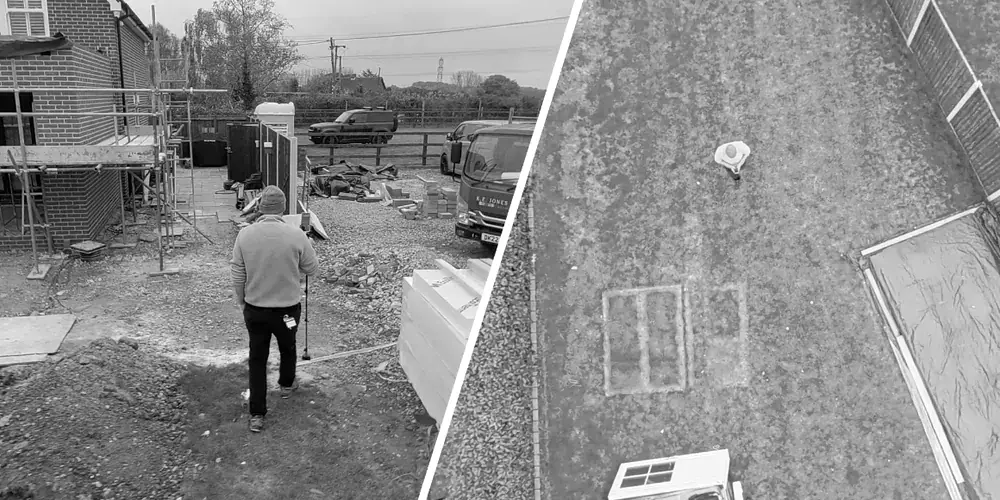
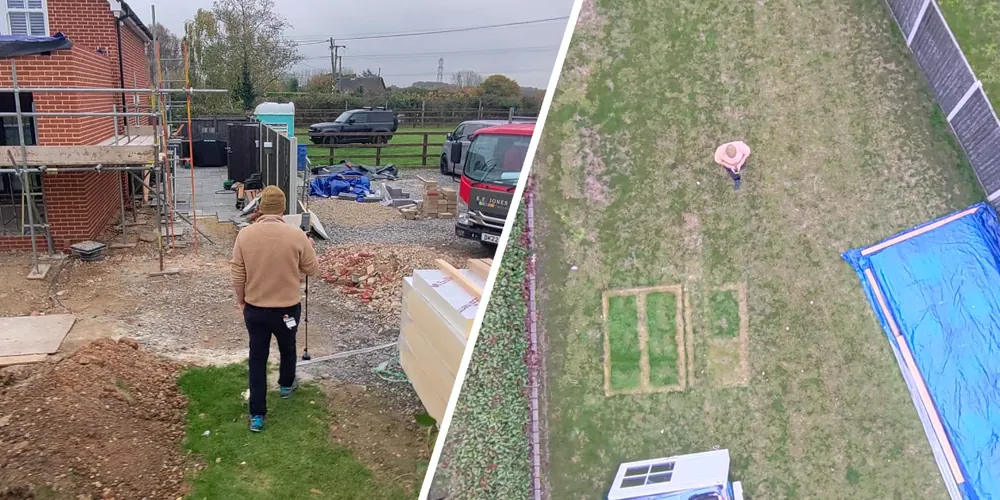
A new project means getting back on site. If the garden is the right size and the levels are straightforward, I prefer to carry out the survey myself. That only applies to smaller gardens, or sites without complex level changes or engineering challenges, but when it fits, it works perfectly.
Why I do it myself (when I can)
- It saves the client money.
- I get to walk the site properly, understand its character and spot things that don’t show up on paper.
- In this case it ties in with the building works already under way, which is the ideal. The garden isn’t an afterthought: it develops side by side with the house.
My survey kit
I keep it simple but accurate:
- Moasure: a digital measuring tool that captures boundaries, curves and subtle changes in level quickly and precisely.
- A drone: back at my desk, I review the aerial images to check the layout and context, and feed the data straight into my 3D design software.
Why timing matters
This approach only works when:
- The garden is a manageable size
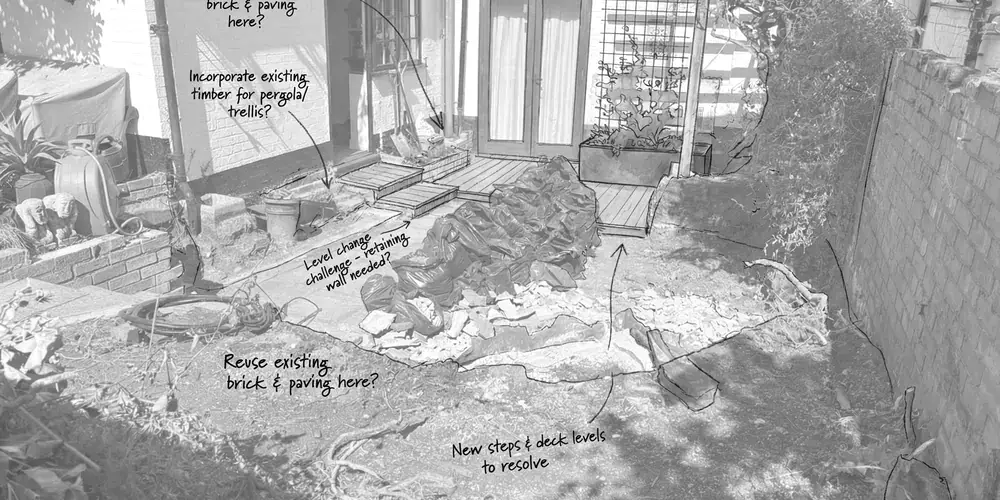
- The levels aren’t too complex and don’t need engineered retaining walls
- There is access to the site during early construction
When all those boxes are ticked, the design starts at the right moment. The garden becomes part of the architecture rather than a final decoration, and decisions on levels, views and access are made before it’s too late.
Being there from day one means stronger ideas, smoother builds and gardens that feel as if they were always meant to be there.
Filed under Project insights on 9 November 2025