


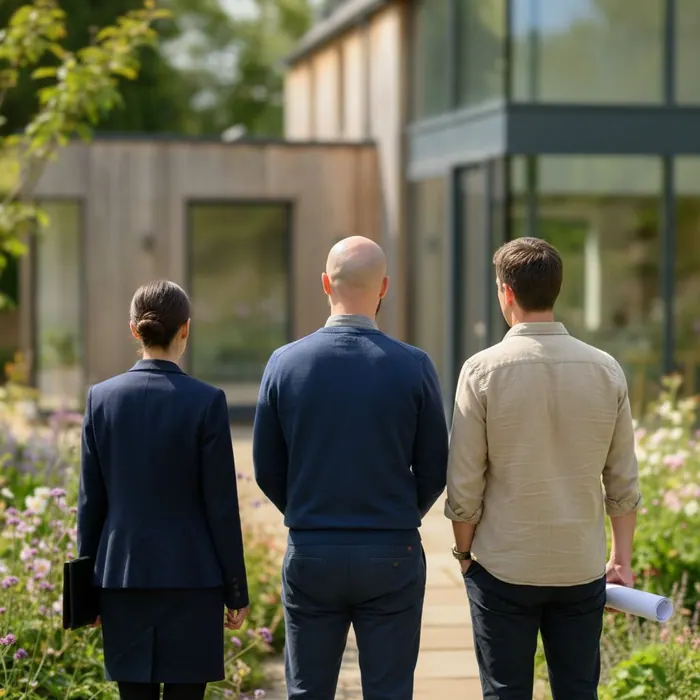
This post came about this morning. I arrived on a new project in Suffolk to meet the client, the architect and the estate agent. Between us, there were decades of experience, different specialisms and different perspectives. And yet, within the first few minutes, we all paused. Not because the idea was wrong, but because the rules around garden rooms aren’t always clear.
If experienced professionals can stop and double-check, it’s easy to see why homeowners feel confused. So this guide is here to cut through the noise and explain things simply.
Garden rooms are one of the most common questions I’m asked. Not about design, not about planting, but this one: “Do I need planning permission?” The good news is that most people don’t. The better news is that it’s simpler than it sounds.
Planning permission is often not required
In many cases, a garden room falls under permitted development. That means you can build it without submitting a planning application, as long as a few clear rules are followed. Most garden rooms are fine if they are:
- Single storey
- Built in the rear or side garden (not the front)
- Not taking up more than half of your garden
- Within set height limits
- On a property that still has permitted development rights
If your home is listed, in a conservation area or has had its permitted development rights removed, the rules change. That’s always worth checking early.
Height and boundary rules (the bit most people trip up on)
This is where things usually get confusing, so here it is plainly.
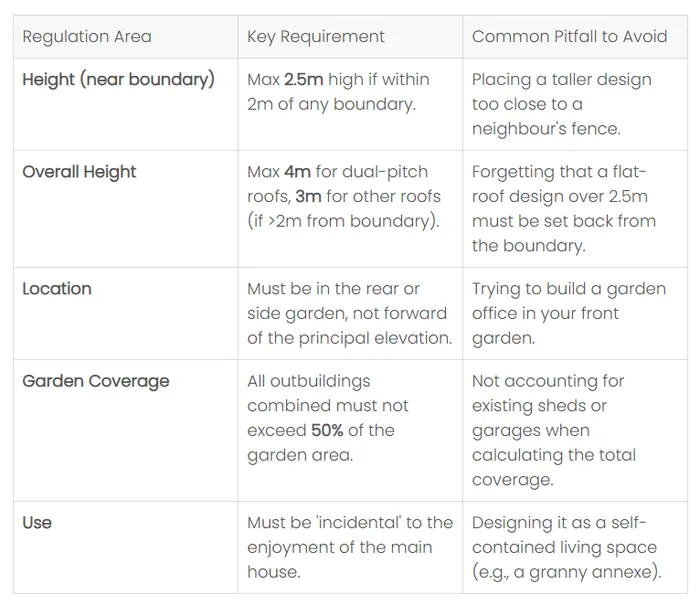
- Within 2 metres of a boundary: a maximum height of 2.5 metres
- More than 2 metres from all boundaries: up to 3 metres with a flat roof
- More than 2 metres from all boundaries: up to 4 metres with a pitched roof
Designing around these limits early avoids expensive redesigns later.
What about Building Regulations?
Planning permission and Building Regulations are not the same thing. Planning looks at where and how big. Building Regulations look at how it’s built. You’ll usually need Building Regulations approval if:
- The garden room is over 30m²
- It’s used for sleeping
- It’s very close to a boundary and over 15m²
- You’re adding full plumbing or complex services
Smaller, detached garden rooms used as studios, offices or quiet retreats often don’t need it, but it depends on the layout and use. This is why asking early matters.
A quick way to sense-check your idea
Ask yourself:
- Is it modest in size?
- Is it clearly ancillary to the house, not a separate home?
- Is it designed to sit comfortably in the garden, not dominate it?
If the answer is yes, you’re usually on safe ground.
Why clarity upfront saves money
This isn’t about paperwork for the sake of it. Getting the rules right early:
- Avoids delays once builders are on site
- Prevents awkward conversations with neighbours
- Protects resale value later
- Keeps the design honest and in proportion
Good garden rooms feel settled. They don’t push boundaries, literally or figuratively.
How I help at Studio Stour
When I design a garden room, I don’t treat it as an isolated object. I look at:
- The house
- The garden
- The neighbours
- How it will be used in the long term
- How it will age over time
That way, the design works with the rules, not against them, and you get a space that feels as if it has always belonged there.
If you’re considering a garden room and want to sense-check an idea before committing, get in touch. A short conversation early can save a lot of stress later.
Filed under Field notes on 8 January 2026